Sunday, 28 October 2018

What Is Streaming TV?

The success of streaming media is pretty recent, but the idea behind it has been around as long as people have. When someone talks to you, information travels toward you in the form of a sound wave. Your ears and brain decode this information, allowing you to understand it. This is also what happens when you watch TV or listen to the radio. Information travels to an electronic device in the form of a cable signal, a satellite signal or radio waves. The device decodes and displays the signal.
In streaming video and audio, the traveling information is a stream of data from a server. The decoder is a stand-alone player or a plugin that works as part of a Web browser. The server, information stream and decoder work together to let people watch live or prerecorded broadcasts.
Here are some of the screenshots:


https://computer.howstuffworks.com/internet/basics/streaming-video-and-audio.htm

Friday, 26 October 2018

What is WOW64?

64-bit is a CPU architecture that is capable of transferring 64-bits of data per clock cycle. More plainly, it's the amount of data your CPU can handle each time it processes information. You can think this architecture as a road that's 32 lanes wide; only 32 "vehicles" (bits of data) can go through an intersection at a time.
In more technical terms, 64-bit is referencing the width of the registers on a computer's microprocessor or the computer bus; sometimes called WOW64 and x64.
https://www.computerhope.com/jargon/num/64bit.htm

Thursday, 25 October 2018

What is Java Web Start

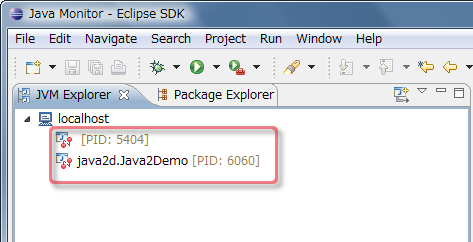
Java Web Start software provides the power to launch full-featured applications with a single click. Users can download and launch applications, such as a complete spreadsheet program or an Internet chat client, without going through lengthy installation procedures.

With Java Web Start software, users can launch a Java application by clicking a link in a web page. The link points to a Java Network Launch Protocol (JNLP) file, which instructs Java Web Start software to download, cache, and run the application.

Here are some of the screenshots:
https://www.baeldung.com/java-web-start


What is the jarsigner tool?

The next tool we'll look at is the jarsigner tool; this tool creates signed JAR files. The jarsigner tool uses the information in a keystore to look up information about a particular entity and uses that information either to sign or to verify a JAR file. 

The keystore that jarsigner uses is subject to the KeyStore class that has been installed into the virtual machine; if you have your own keystore implementation, jarsigner will be able to use it. Similarly, if you use the standard keystore implementation, but hold the keys in a file other than the default .keystorefile, jarsigner will allow you to use that other file as well.

Here are some of the screenshots:


Wednesday, 24 October 2018

What is Eclipse Plugin?

Plugins are the smallest deployable and installable software components of Eclipse.
Each plugin can define extension-points which define possibilities for functionality contributions ( code and non-code ) by other plugins. Non-code functionality contributions are for example the provision of help content.
The basis for this architecture is the runtime environment Equinox of Eclipse which is the reference implementation of OSGI. See OSGi development - Tutorial for details.
The Plugin concept of Eclipse is the same as the bundle concept of OSGI. Generally speaking a OSGI bundle equals a Plugin and vice-versa.

Here are some of the screenshots:


http://www.vogella.com/tutorials/EclipsePlugin/article.html

What is Maven?

Maven is a "build management tool", it is for defining how your .java files get compiled to .class, packaged into .jar (or .war or .ear) files, (pre/post)processed with tools, managing your CLASSPATH, and all others sorts of tasks that are required to build your project. It is similar to Apache Ant or Gradle or Makefiles in C/C++, but it attempts to be completely self-contained in it that you shouldn't need any additional tools or scripts by incorporating other common tasks like downloading & installing necessary libraries etc.

It is also designed around the "build portability" theme, so that you don't get issues as having the same code with the same buildscript working on one computer but not on another one (this is a known issue, we have VMs of Windows 98 machines since we couldn't get some of our Delphi applications compiling anywhere else). Because of this, it is also the best way to work on a project between people who use different IDEs since IDE-generated Ant scripts are hard to import into other IDEs, but all IDEs nowadays understand and support Maven (IntelliJ, Eclipse, and NetBeans). Even if you don't end up liking Maven, it ends up being the point of reference for all other modern builds tools.

Here are some of the screenshots:


https://stackabuse.com/what-is-maven/

What is the HornetQ Messaging System?

HornetQ is an open source project to build a multi-protocol, embeddable, clustered messaging system with very high performance, .

Messaging systems (or MOM for Message-oriented middleware) are systems focused on sending and receiving messages to increase the interoperability, flexibility and the performance of applications. They decouple the producers of messages from the consumers. The producers and consumers of messages are completely independent and are not aware of each other spatially (they can run on different nodes) and temporally (they do not need to be running at the same time, the producers can send messages even if there is no consumers and vice versa). This allows to create systems more flexible and loosely coupled than using remote procedure calls (or RPC).

Messaging systems are often used to implement as message bus which loosely couples heterogeneous systems together. Using a message bus to decouple disparate systems allows the systems to grow independtly and adapt more easily. It provides more flexibility to add new systems or update existing ones since they don't have brittle tight-coupled dependencies on each other.

Here are some of the screenshots:


https://dzone.com/articles/hornetq-getting-started